Does Chewing Gum Give You a Jawline? What a 6-Month Trial Found
Does chewing gum give you a jawline? In a 6-month trial, daily gum made the bite stronger but didn't change the jaw muscle or jaw shape. What actually works.
By the Aesthetica Team5 min read
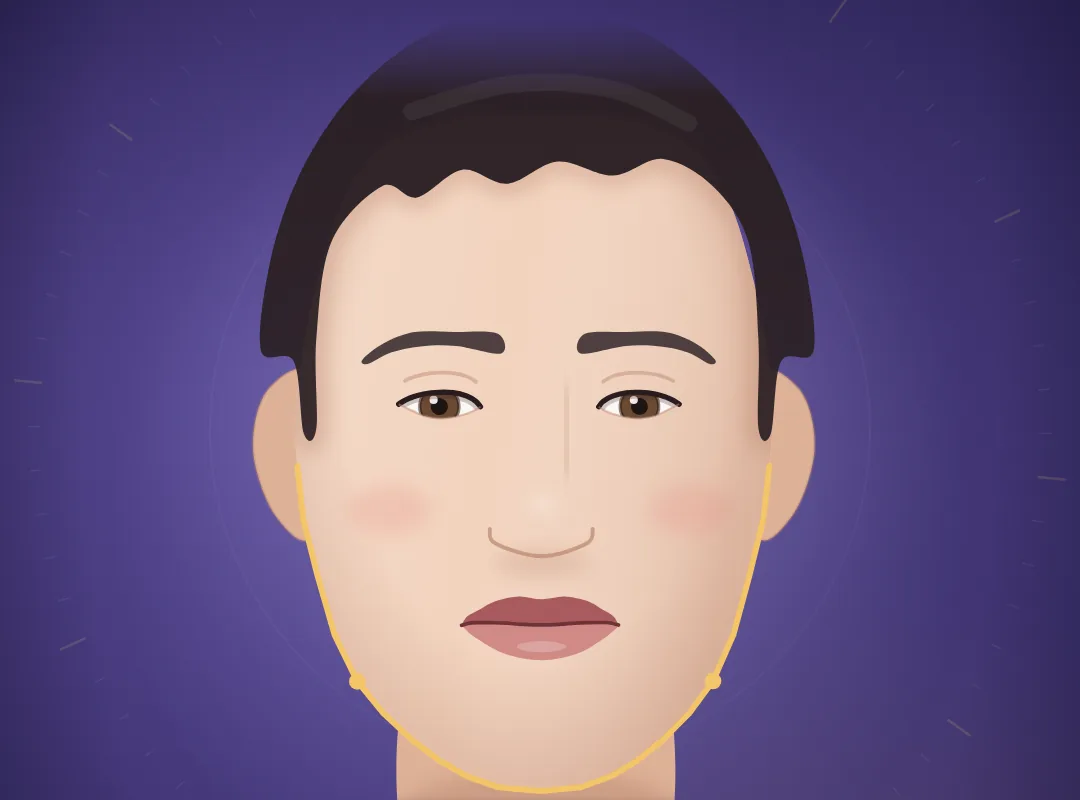
No — at least not the way TikTok promises. In a randomized trial published in 2024, adults who chewed gum three times a day for six months ended up with a stronger bite, but their jaw muscle thickness and jaw shape didn't change. And heavy chewing has a downside: it's linked to jaw pain and, in one study of young people, to frequent headaches.
The jawline you see in photos depends far more on body fat, head posture and camera angle than on chewing. Below: what gum actually trains, what the studies show, and what to do instead.
The short answer
| Question | What the evidence says |
|---|---|
| Does gum build the jaw muscle? | Not measurably in a 6-month trial; bite force went up, muscle thickness didn't |
| Does it change the jaw bone? | No: jaw shape didn't change in the 6-month trial |
| Can heavy chewing make the face look wider? | Possibly: intensive and one-sided chewing have been linked to an enlarged jaw muscle, a rare condition with an often unclear cause |
| Is there a downside? | Overuse is linked to jaw pain, clicking and, in one study of young people, frequent headaches |
| What actually sharpens a jawline? | Lower body fat, better head posture, grooming and photo angle |
What gum actually trains
Clench your teeth and put your fingers on the angle of your jaw, just in front of the ear lobe. The muscle that bulges is the masseter, the main chewing muscle. It's the only thing gum can train: chewing doesn't touch your jaw bone, your chin or the fat under your jaw.
That matters, because a “sharp jawline” in photos is mostly about the edge of the jaw being visible — the line from the ear to the chin — not about a bigger muscle at the corner.
The trial: six months of gum
In 2024, researchers at Yonsei University (Jung and colleagues) published a randomized controlled trial in the Journal of Oral Rehabilitation. Fifty-eight healthy adults were split into two groups: one chewed gum three times a day for six months, the other didn't. The team measured bite force and masseter thickness at the start and after one, three and six months, and jaw shape at the start and the end.
- Bite force went up. By three months, the gum group could bite noticeably harder than at the start and than the control group.
- The muscle and the jaw didn't change. Masseter thickness and jaw shape showed no significant change.
So the jaw got stronger at biting, not bigger or sharper. That's the opposite of what the “chew gum for a jawline” videos imply.
Can it backfire?
The worry with jawline gum isn't a sharper face — it's a wider one, or a sore one.
- A wider, squarer lower face. An enlarged masseter (masseteric hypertrophy) gives the lower face a square, wide look. A 2025 review in Toxins describes it as rare and its cause as often unclear, but notes that intensive gum chewing and chewing mostly on one side have been linked to it. It's the opposite of what people chasing a "V-shaped" face want.
- Jaw pain and clicking. Overworking the jaw joint (the TMJ) can cause pain, clicking and fatigue. Tough “jawline gums” and jaw exercisers load it even more.
- Headaches. In a 2014 study in Pediatric Neurology (Watemberg and colleagues), 30 young people with chronic headaches who chewed gum for one to six hours a day stopped for a month. Twenty-six improved and nineteen stopped having headaches altogether; when some started chewing again, the headaches came back. It was small and had no control group, but it's a pattern worth knowing.
A piece of gum after lunch is fine. Hours a day “for the jawline” is where the downsides start.
What actually sharpens a jawline
- Lower body fat. The jaw edge shows when there's less fat along and under it. This is the biggest lever for most people, and it comes from overall fat loss, not face exercises. See how to lose face fat.
- Head posture. Forward head posture softens the jaw and neck line. Stand tall and, in photos, push your chin slightly forward and down.
- Grooming and framing. A well-shaped beard, the right haircut and good skin all change how defined the lower face reads.
- Camera angle. A phone held below the face shows the soft area under the jaw; eye level or slightly above shows the jaw edge.
More on all four in how to get a sharper jawline. If you're tempted by jaw-posture trends, read does mewing work first.
Check yours
- Find the masseter. Clench and feel the jaw angle. If it's sore, or you wake up with a tight jaw or worn teeth, you may be clenching or grinding — worth mentioning to a dentist.
- Look at the edge, not the corner. Take a straight-on photo at eye level and look for a continuous line from the ear to the chin.
- Measure instead of guessing. The free face shape detector and AI face analysis measure your face shape and proportions from one photo. Aesthetica tracks them over time, so you can see whether fat loss or posture changes are working.
- Keep perspective. An AI face rating reflects one photo. Lighting, angle and posture change it; in the trial, six months of chewing didn't change the jaw at all.
FAQ
Does chewing gum give you a jawline?
Not measurably. In a 6-month randomized trial, chewing gum three times a day increased bite force but didn't change masseter thickness or jaw shape. A sharper-looking jawline comes mainly from lower body fat, posture and photo angle.
Can chewing gum make your face wider?
Intensive gum chewing and chewing mostly on one side have been linked to an enlarged masseter muscle, which makes the lower face look squarer and wider, although the condition is rare and its cause often unclear. Normal gum use is unlikely to do this, but chewing for hours a day "for the jawline" isn't a good idea.
Is mastic gum good for your jawline?
There's no good evidence that hard “jawline” gums like mastic sharpen the jaw. They load the jaw joint more than normal gum, which raises the risk of pain and clicking.
How long does it take for chewing gum to change your jaw?
In the six-month trial, it didn't change the jaw at all: only bite force increased, by about three months. Masseter thickness and jaw shape stayed the same.
What is the fastest way to get a sharper jawline?
For most people: lose overall body fat, fix forward head posture and use better photo angles. Grooming, like a well-shaped beard, can define the lower face right away.
Sources
- Jung, et al. (2024). Effects of gum chewing training on occlusal force, masseter muscle thickness and mandibular shape: a randomised controlled clinical trial. Journal of Oral Rehabilitation.
- Watemberg N, et al. (2014). The influence of excessive chewing gum use on headache frequency and severity among adolescents. Pediatric Neurology.
- Toxins review (2025). Masticatory muscle hypertrophy: a review. Toxins.