What Is a Good Face Rating? The 1–10 Face Score Scale Explained
What your AI face rating means: the 1–10 face score scale, what counts as average or high, why scores change between photos and how much people agree.
By the Aesthetica Team4 min read
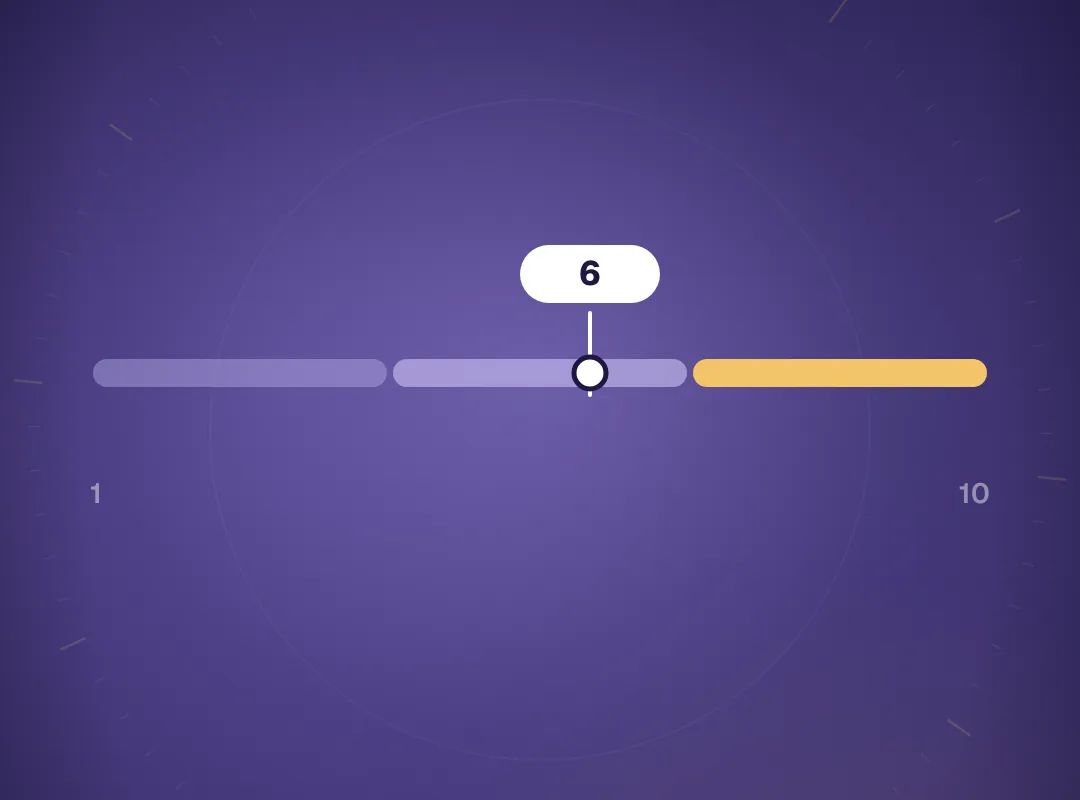
On Aesthetica's 1–10 scale, most people score between 5 and 7, so anything above 7 is a good face rating and 8 or more is excellent. A 6 isn't bad; it's typical. Before you read much into any number, check the photo: lighting, camera distance and head tilt can move a score more than most people expect.
The face rating scale
Here's how to read a score on Aesthetica's AI face rating:
| Face score | What it means |
|---|---|
| 8.5 – 10 | Exceptional: very high symmetry, harmonious proportions and clear skin |
| 7 – 8.4 | Above average: strong features with a few focus areas |
| 5 – 6.9 | Average: the range most people fall into |
| 3.5 – 4.9 | Below average: often pulled down by photo quality, skin or grooming |
| Below 3.5 | Rare: usually a sign of a poor photo (bad light, angle, blur) |
How much do people agree on who's attractive?
More than the saying "beauty is in the eye of the beholder" suggests, but less than a single number implies:
- Agreement is real. A large meta-analysis by Langlois and colleagues (Psychological Bulletin, 2000) combined the results of many studies and found that raters agree about who is and isn't attractive, both within and across cultures.
- So is personal taste. In a study of more than 35,000 people who rated faces online, Germine and colleagues (Current Biology, 2015) found that two random people agreed on facial attractiveness only about half the time. The rest came down to individual taste, shaped mostly by each person's own experiences rather than their genes.
A face score measures the shared part: the symmetry, proportions and skin features most raters respond to. The personal half, who finds you attractive and why, is something no number captures. That's why a score is a guide, not a verdict.
Why your face score changes between photos
If you rate several selfies, you'll see the score move. The usual reasons:
- Camera distance. A phone held close distorts the face. In a model by Ward and colleagues (JAMA Facial Plastic Surgery, 2018), a selfie from about 12 inches (30 cm) made the base of the nose look around 30% wider than a photo from 5 feet (1.5 m).
- Lighting. Harsh overhead or side light casts shadows that hide skin quality and change how shapes read.
- Head tilt. Even a small tilt or turn changes symmetry measurements.
- Expression. A neutral face gives the most consistent score. People, though, rate a smiling face as more attractive: in experiments by Golle and colleagues (Cognition and Emotion, 2014), stronger smiles raised attractiveness ratings. So measure with a neutral face, but smile in the photos you share.
- Filters. Beauty filters move and smooth features, which confuses landmark detection.
For consistent scores, follow our guide to the best selfie for AI face rating.
What goes into the score?
An AI face rater combines several measurements. See How Does AI Face Rating Work? for the details:
- Facial symmetry
- Proportions, including the facial thirds and golden ratio guides
- Face shape harmony
- Skin quality
- The eye area and hairline
How to improve your face rating
Your bone structure is fixed, but a lot of what a score picks up isn't:
- Retake the photo first. Daylight from the front, camera at eye level, arm's length or further, head straight, no filter.
- Skin: a simple routine of cleanser, moisturizer and daily sunscreen improves clarity and tone. See our skincare routine.
- Hairstyle: a cut suited to your face shape balances your proportions.
- Grooming: tidy brows and a well-shaped beard sharpen your features.
- Sleep: less puffiness and fewer dark circles change the eye area noticeably.
- Body fat: a leaner face often shows more jaw and cheekbone definition.
For a structured, healthy approach, see our looksmaxxing guide.
FAQ
Is 7 a good face rating?
Yes. On Aesthetica's scale, a 7 out of 10 is above average; most people score between 5 and 7.
What is the average face rating?
On Aesthetica's 1–10 scale, the average falls around 5.5 to 6.5.
Is a 10/10 face rating possible?
It's extremely rare. Even very attractive people usually score in the high 8s or 9s, because no face is perfectly symmetrical or proportioned.
Why is my face rating low?
Usually because of the photo: poor lighting, a close-up wide-angle selfie, a tilted head or a filter. Retake it in daylight at eye level from arm's length before drawing conclusions.
Do people agree on who is attractive?
Partly. Raters agree on attractiveness within and across cultures, but in a study of more than 35,000 people, two random people agreed only about half the time. The rest is personal taste.
Sources
- Langlois JH, Kalakanis L, Rubenstein AJ, et al. (2000). Maxims or myths of beauty? A meta-analytic and theoretical review. Psychological Bulletin 126(3):390–423.
- Germine L, et al. (2015). Individual aesthetic preferences for faces are shaped mostly by environments, not genes. Current Biology 25(20):2684–2689.
- Ward B, Ward M, Fried O, Paskhover B (2018). Nasal distortion in short-distance photographs: the selfie effect. JAMA Facial Plastic Surgery 20(4):333–335.
- Golle J, Mast FW, Lobmaier JS (2014). Something to smile about: the interrelationship between attractiveness and emotional expression. Cognition and Emotion 28(2):298–310.