What Makes a Face Attractive? Averageness, Symmetry, Skin and Expression
What makes a face attractive, according to decades of studies: averageness, symmetry, skin and expression, why blended faces score high, and why the top faces aren't average.
By the Aesthetica Team9 min read
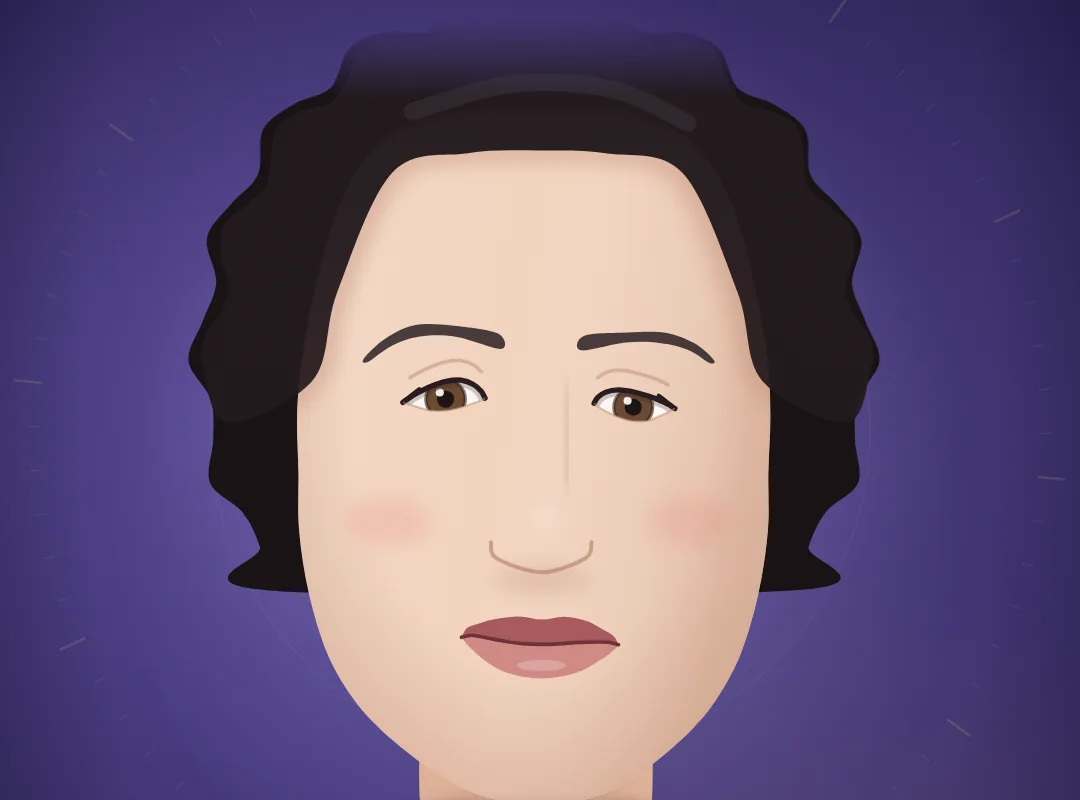
Research points to a short list: averageness (a face close to the typical shape for its population), symmetry, healthy-looking skin, sex-typical features and a relaxed, friendly expression. The most surprising of these is averageness. When psychologists blend many real faces into one, the blended face is rated more attractive than almost every face that went into it — and the more faces they blend, the better it looks.
There is a twist, though: the very most attractive faces are not average. Below: the experiments, why the brain likes average faces, and what it means for how you see your own face.
The short answer
| Factor | What studies find | How strong |
|---|---|---|
| Averageness | Faces close to the population average are rated more attractive | One of the most replicated findings |
| Symmetry | More symmetrical faces are rated a little more attractive | Real but modest; perfect symmetry isn't the goal |
| Sex-typical features | More feminine female faces tend to be preferred; for male faces, results are mixed (Perrett and colleagues, Nature, 1998) | Depends on the study |
| Skin | Even, smooth-looking skin raises ratings (Fink, Grammer and Thornhill, 2001) | Clear effect |
| Expression | Happy faces are rated more attractive than neutral ones (Golle, Mast and Lobmaier, 2014) | Clear, and the easiest to change |
None of these is a fixed formula. Gillian Rhodes's review of the field (Annual Review of Psychology, 2006) found that averageness, symmetry and sex-typical features are each attractive in both male and female faces and across cultures, but they describe what raises average ratings across many raters, not what makes one particular person attractive to another.
The experiment: blending faces into one
In 1990, Judith Langlois and Lori Roggman published a paper with a provocative title: Attractive Faces Are Only Average (Psychological Science). They photographed young adults, digitized the photos and averaged them with a computer, building composites from a few faces up to 32 faces. Then they asked people to rate the attractiveness of the real faces and of the composites.
The results were striking:
- Composites beat individuals. For both male and female faces, the blended faces were rated more attractive than almost all of the individual faces they were made from.
- More faces, more attractive. Composites built from more faces were rated higher than composites built from only a few.
A blended face is, by definition, average in shape: every feature sits at the typical position and size for that group of faces. So the authors argued that averageness itself is attractive.
Why would an average face look good?
Two explanations have the most support, and they are not mutually exclusive.
It's easy on the mind
Your brain builds a mental prototype of a face from every face you have seen. A face close to that prototype is processed quickly and easily, and things that are easy to process tend to feel pleasant.
The strongest evidence that this is a general effect, not something special about faces: in 2000, Jamin Halberstadt and Gillian Rhodes (Psychological Science) found that averageness also predicted attractiveness for dogs, birds and wristwatches. People simply tend to like typical examples of a category. Later work by Piotr Winkielman and colleagues (Psychological Science, 2006), titled Prototypes Are Attractive Because They Are Easy on the Mind, tied the preference for prototypes directly to this ease of processing.
It may signal health
The evolutionary explanation is that an average face may signal genetic diversity and a development that wasn't thrown off course by illness or stress. This idea is popular, but when Rhodes and colleagues (Evolution and Human Behavior, 2001) compared the faces of 17-year-olds with their medical records, the support was limited: boys whose faces looked less average had been less healthy as children, but for girls the links were only marginal. Treat it as a hypothesis, not a fact.
Isn't it just smooth skin and symmetry?
That was the obvious criticism. Blending photos smooths out blemishes and makes faces more symmetrical, so maybe the composites won for those reasons.
Researchers tested this:
- Symmetry: In 1999, Rhodes, Sumich and Byatt found that averageness and symmetry each made their own contribution to attractiveness. Making faces more average still raised ratings when every image had been made perfectly symmetrical.
- Skin: Studies using line drawings of faces — which have no skin texture at all — found the same pattern: drawings moved toward the average were rated more attractive, and exaggerated “caricature” versions less attractive (Rhodes & Tremewan, 1996).
So smooth skin and symmetry help, but they don't explain the whole averageness effect.
The twist: the most attractive faces aren't average
In 1994, David Perrett, Keith May and Sakiko Yoshikawa published a study in Nature that complicated the story. They made two composites of female faces: one from a whole set of faces, and one from only the faces rated most attractive.
- The attractive composite beat the average composite.
- When they exaggerated the shape differences between the attractive composite and the average, it was rated even more attractive.
- Japanese and Caucasian raters showed the same preferences for the same composites.
Timothy Alley and Michael Cunningham had already put the idea in a paper title three years earlier (Psychological Science, 1991): averaged faces are attractive, but very attractive faces are not average.
The way to reconcile both findings: averageness is a strong baseline, not the peak. A face close to average looks pleasant and approachable. A face that departs from average in particular directions can look even more striking, while departures in other directions read as less attractive.
What this means for your own face
- Distinctive is not a flaw. Almost no real face is exactly average, and plenty of faces people find very attractive have a distinctive nose, jaw or smile. Averageness is a statistical tendency across many raters, not a template to match.
- Don't chase "average". There is no healthy way to make a face more average, and you don't need one. What reliably moves ratings is what you can actually control: an even, rested look, healthy skin, a relaxed expression and good photos.
- Photos can push your face away from typical proportions. A phone held close to your face enlarges the nose: in a model by Ward and colleagues (JAMA Facial Plastic Surgery, 2018), a selfie from about 30 cm made the base of the nose look about 30% wider than a photo from 1.5 m. So a close selfie makes your proportions look less typical than they are in person. Shoot from arm's length or farther, straight on, at eye level, in even light. More on this in why you look different in photos.
- Group shots may help — a little. People rated faces slightly more attractive in a group photo than alone (Walker & Vul, 2014, the “cheerleader effect”), possibly because the brain averages the faces in a group. The effect is small, and two replications by Ojiro and colleagues (2015) couldn't reproduce it, so treat it as a bonus, not a strategy.
How to see where your face sits
No free tool can tell you how close your face is to "the average face": that would need a reference set of faces from your own population, and the studies above each built their own. What you can measure is the two traits with the clearest rules, symmetry and proportions. Here is exactly what the free AI face analysis on this site does, so you know what its numbers mean:
| Measurement | How the tool computes it | What a typical result looks like |
|---|---|---|
| Symmetry | Fits a midline through 21 landmarks down the centre of the face, mirrors each left-side landmark across it and measures how far it lands from its right-side partner, as a share of the distance between the outer eye corners. The score out of 10 is 10 − 26 × that average gap, kept between 4.0 and 9.9. | No face is perfectly symmetrical, so the score tops out at 9.9 by design. |
| Face shape | Compares face length, forehead, cheekbone and jaw widths and the jaw angle with fixed thresholds. Oval is what's left when no ratio is extreme (for example, the face is between 1.2 and 1.42 times as long as it is wide at the cheekbones). | Oval is the closest the tool comes to "no extreme proportions". The thresholds are our own rules, not population averages. |
| Middle and lower thirds | Brow-to-nose-base and nose-base-to-chin, each as a share of their sum (the hairline can't be detected reliably). | Equal thirds are the classical ideal, but measured faces rarely match it (see facial thirds). |
To use it:
- Take a straight-on photo at eye level, from at least arm's length (1.5 m with a timer is better), in soft, even light, with a neutral expression and your hair off your face.
- Run the analysis and check the warnings: the tool flags a photo where your head is turned or tilted, because that changes every number above.
- Take two or three photos and compare. If the symmetry score moves by several points between photos taken a minute apart, that difference is the camera, not your face.
- Read the result as information, not a verdict. An AI face rating also reflects one photo, and lighting, angle and expression change it more than most people expect.
For the other pieces of the puzzle, see how to improve facial symmetry and facial dimorphism.
FAQ
What makes a face attractive?
Studies consistently point to averageness (being close to the typical face shape), symmetry, healthy-looking skin, sex-typical features and a relaxed or friendly expression. No single feature decides it, and personal taste still varies a lot from person to person.
Are average faces really more attractive?
Yes, in the sense that blended composite faces are rated more attractive than most of the individual faces they are made from, and more so as more faces are blended. But the most attractive faces differ from average in specific ways, so average is a strong baseline rather than the ideal.
Is symmetry or averageness more important?
Both matter, and they work independently: making a face more average still raised ratings when every image had already been made perfectly symmetrical (Rhodes, Sumich and Byatt, 1999). Reviews find each is attractive on its own.
Why does an average face look attractive?
The best-supported explanation is that typical faces are easy for the brain to process, and easy processing feels pleasant; people also prefer average-looking dogs, birds and watches. A second idea, that average faces signal good health, has limited evidence: in the one study that checked medical records, the link held for boys' childhood health but was only marginal for girls.
Can I make my face more average?
There is no healthy way to change your face's shape toward average, and you don't need to. What you can change is how your face comes across: lighting, camera distance, skin care, sleep and expression.
Sources
- Langlois JH, Roggman LA (1990). Attractive faces are only average. Psychological Science 1(2):115–121.
- Halberstadt J, Rhodes G (2000). The attractiveness of nonface averages: implications for an evolutionary explanation of the attractiveness of average faces. Psychological Science 11(4):285–289.
- Winkielman P, Halberstadt J, Fazendeiro T, Catty S (2006). Prototypes are attractive because they are easy on the mind. Psychological Science 17(9):799–806.
- Rhodes G, Sumich A, Byatt G (1999). Are average facial configurations attractive only because of their symmetry?. Psychological Science 10(1):52–58.
- Rhodes G, Tremewan T (1996). Averageness, exaggeration, and facial attractiveness. Psychological Science 7(2):105–110.
- Perrett DI, May KA, Yoshikawa S (1994). Facial shape and judgements of female attractiveness. Nature 368:239–242.
- Alley TR, Cunningham MR (1991). Averaged faces are attractive, but very attractive faces are not average. Psychological Science 2(2):123–125.
- Rhodes G (2006). The evolutionary psychology of facial beauty. Annual Review of Psychology 57:199–226.
- Rhodes G, Zebrowitz LA, Clark A, Kalick SM, Hightower A, McKay R (2001). Do facial averageness and symmetry signal health?. Evolution and Human Behavior 22(1):31–46.
- Perrett DI, et al. (1998). Effects of sexual dimorphism on facial attractiveness. Nature 394:884–887.
- Fink B, Grammer K, Thornhill R (2001). Human (Homo sapiens) facial attractiveness in relation to skin texture and color. Journal of Comparative Psychology 115(1):92–99.
- Golle J, Mast FW, Lobmaier JS (2014). Something to smile about: the interrelationship between attractiveness and emotional expression. Cognition and Emotion 28(2):298–310.
- Ward B, Ward M, Fried O, Paskhover B (2018). Nasal distortion in short-distance photographs: the selfie effect. JAMA Facial Plastic Surgery 20(4):333–335.
- Walker D, Vul E (2014). Hierarchical encoding makes individuals in a group seem more attractive. Psychological Science 25(1):230–235.
- Ojiro Y, Gobara A, Nam G, Sasaki K, Kishimoto R, et al. (2015). Two replications of "Hierarchical encoding makes individuals in a group seem more attractive (2014; Experiment 4)". Tutorials in Quantitative Methods for Psychology 11(2).